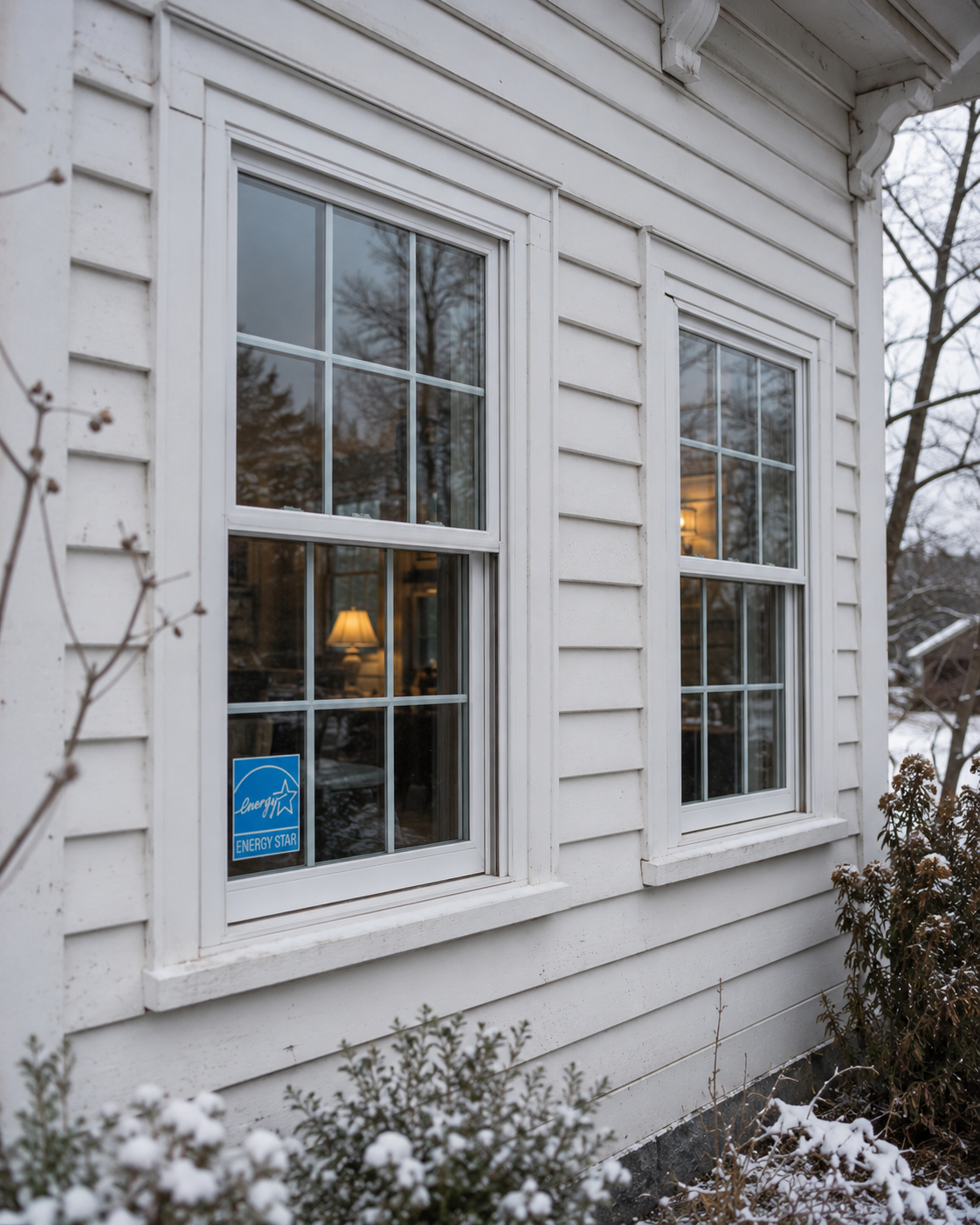
Efficiency Maine runs tiered weatherization rebates that bundle air sealing, insulation, and window upgrades under a single registered-vendor visit. Base coverage runs up to $4,000; moderate-income households go to $6,000; income-qualified to $8,000. Pair that with the longest heating season in the lower 48 and the highest oil-heat dependency in the country, and every leaky sash you tighten shows up as oil-truck deliveries you didn't have to take.

Maine residential heating oil ran ~$2.80/gallon in 2010 and is sitting at $4.10/gallon by 2025. With 58% of Maine households heating with oil (highest in the U.S.), the climb hits the household balance sheet harder here than anywhere else. Windows cut your heating fuel usage 15-30% on day one, so your annual oil draw drops by that much before the next price climb compounds it.
Take a 1,800 sq ft 1948 Cape in Cumberland County, oil-heated with mini-split AC, with fourteen original wood-sash single-pane windows. Annual oil + electric bills run ~$3,400. The owner books an Efficiency Maine Home Energy Savings Program visit through a registered vendor, which bundles air sealing and insulation alongside the window upgrade. Annual heating + cooling drops 22%, comfort and condensation improve the first cold night, and the project earns back oil deliveries for 25-30 years.
See the pieces of the stackMaine's windows project doesn't pencil on rebates alone. It pencils on the longest heating season in the lower 48, the highest oil-heat dependency in the country, and an Efficiency Maine program that pays the registered vendor directly for the bundled envelope work. Every BTU you don't burn is paid for at oil-truck prices, all winter, every winter.
A Maine windows project earns through three working channels: the Efficiency Maine bundled-weatherization rebate, ongoing oil + electric bill reductions in the country's longest heating season, and the comfort + property-value lift that arrives the first cold night.
A typical Maine windows project runs 8–11 weeks from the Efficiency Maine visit to commissioning, with bundled weatherization happening in the middle and a slightly longer lead time on glazing than southern New England.
Actual questions that come up in the first installer conversation, answered for a typical Maine homeowner in 2026.
Efficiency Maine runs a weatherization rebate structure through registered vendors, not a direct per-window check. The vendor pulls the rebate on the bundled project (air sealing + insulation + windows where eligible), and the homeowner sees the rebate reflected in the project paperwork. Tier coverage runs up to $4,000 for the base tier, $6,000 for moderate-income, and $8,000 for income-qualified households. The bigger long-term value is in the heating-bill drop, since Maine burns oil for 58% of its home heat.
For zone 6A and especially zone 7 (Aroostook County), triple-pane starts to make sense in a way it doesn't in southern New England. The U-value drops from ~0.22 (good double) to ~0.16-0.19 (good triple), a meaningful difference when you have 7,500+ HDD. The honest answer: triple-pane on north-facing windows and exposed faces, double-pane on protected south sides. The Score sequences this for your specific exposure.
For some homes, yes, and Maine has a lot of these homes. If your wood-sash originals are still operable and the wood is sound, a quality interior storm panel (Indow, Innerglass, or similar) or a low-E exterior storm can deliver double-pane-equivalent performance without touching the original character. This is often the right move on antique homes in places like Bath, Castine, or Camden where the windows are part of the architecture. The Score weighs storm-versus-replace based on the condition of your existing units.
Three numbers matter on the NFRC label: U-factor (lower is better, aim for ≤ 0.22 for double-pane, ≤ 0.20 for triple), SHGC (solar heat gain, for Maine you actually want this moderate-to-high, around 0.30-0.40, to let in passive solar warmth in winter), and air leakage (≤ 0.30 cfm/sq ft). ENERGY STAR Northern Climate Zone certification bundles all of this. Avoid hot-climate "low SHGC" coatings, they were designed for Phoenix, not Portland.
Three additional levers: (1) Maine burns oil for 58% of home heat at $4+/gallon delivered, so every gallon you don't buy is real cash; (2) the heat-pump electric load drops too, since the new windows shed less heat into the cold air the mini-splits are working against; (3) noise, condensation, and resale-value benefits arrive on day one and compound for the life of the windows.
Yes. Salt-laden air corrodes aluminum and degrades cheap vinyl. For homes within ~500 ft of the ocean, the durable specs are fiberglass frames with stainless or coated hardware, marine-grade weatherstripping, and exterior trim that drains rather than pools. Coastal Maine installers know this; the Score will flag your coastal exposure based on your address and route you to installers who carry the right product lines.
Looking for the same kind of program in another state, or a different program in yours? Tap any pill to jump.
Your Home Efficiency Score counts your single-pane windows, runs the Efficiency Maine tier math, and shows your real oil + electric bill drop based on your fuel supplier, utility, and house size.
Get my report