Keep the power on. Use every kWh you make.
A home battery does three jobs at once. It keeps the fridge, well pump, and lights running when the grid drops. It captures every kWh your solar panels make instead of exporting at lower-tier rates. And in several states, it earns you annual payments by letting the utility tap your battery during peak demand. Rhode Island pays around $1,125 a year for a 5 kW Powerwall. Massachusetts pays similar. Vermont leases you a Powerwall for $55 a month. Pick yours.
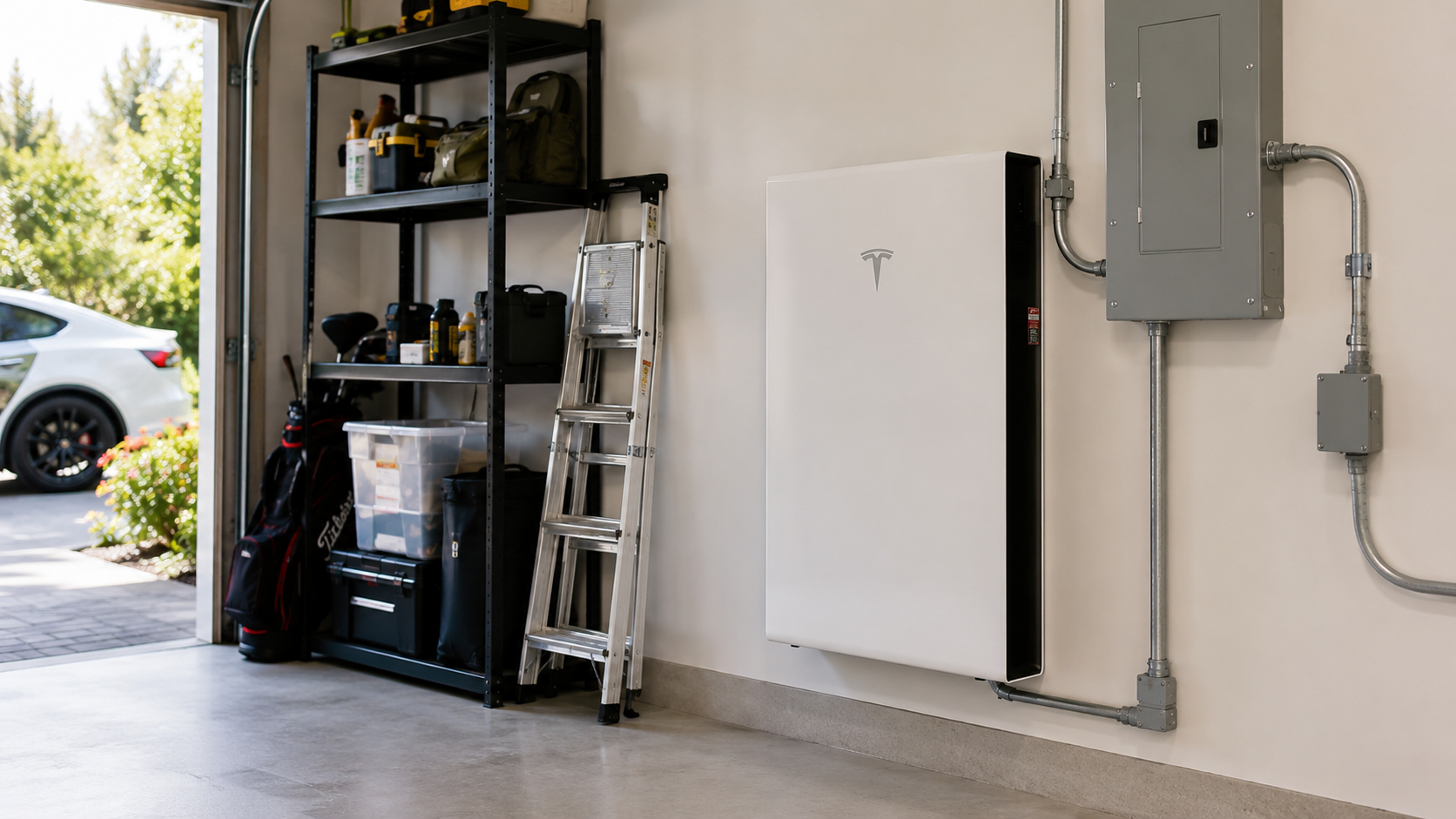
The numbers that hold in every state we serve.
Four reasons a battery earns its keep on day one.
Two ways the battery earns.
Same hardware, two paths to value. Your state and your goals shape which one carries the bigger weight.
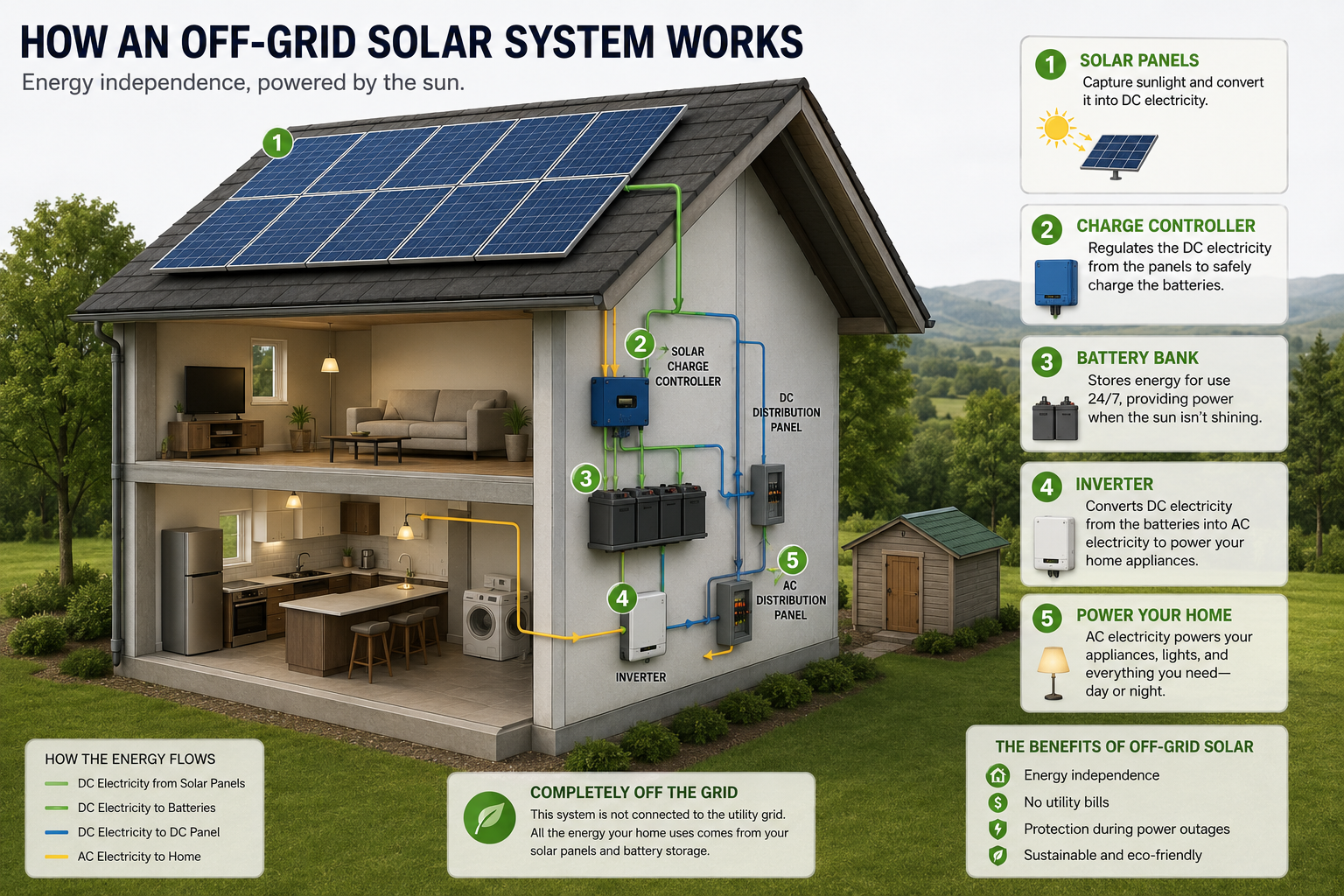
During the day, your solar charges the battery. When the sun goes down, the house pulls from the battery instead of importing at retail. When the grid drops, the system islands automatically: kitchen, well pump, internet, primary HVAC zone, all stay on. The same hardware does both jobs without anyone flipping a switch. The math compounds quietly every day the system runs, and pays out in full the next time the lights flicker.
Get my report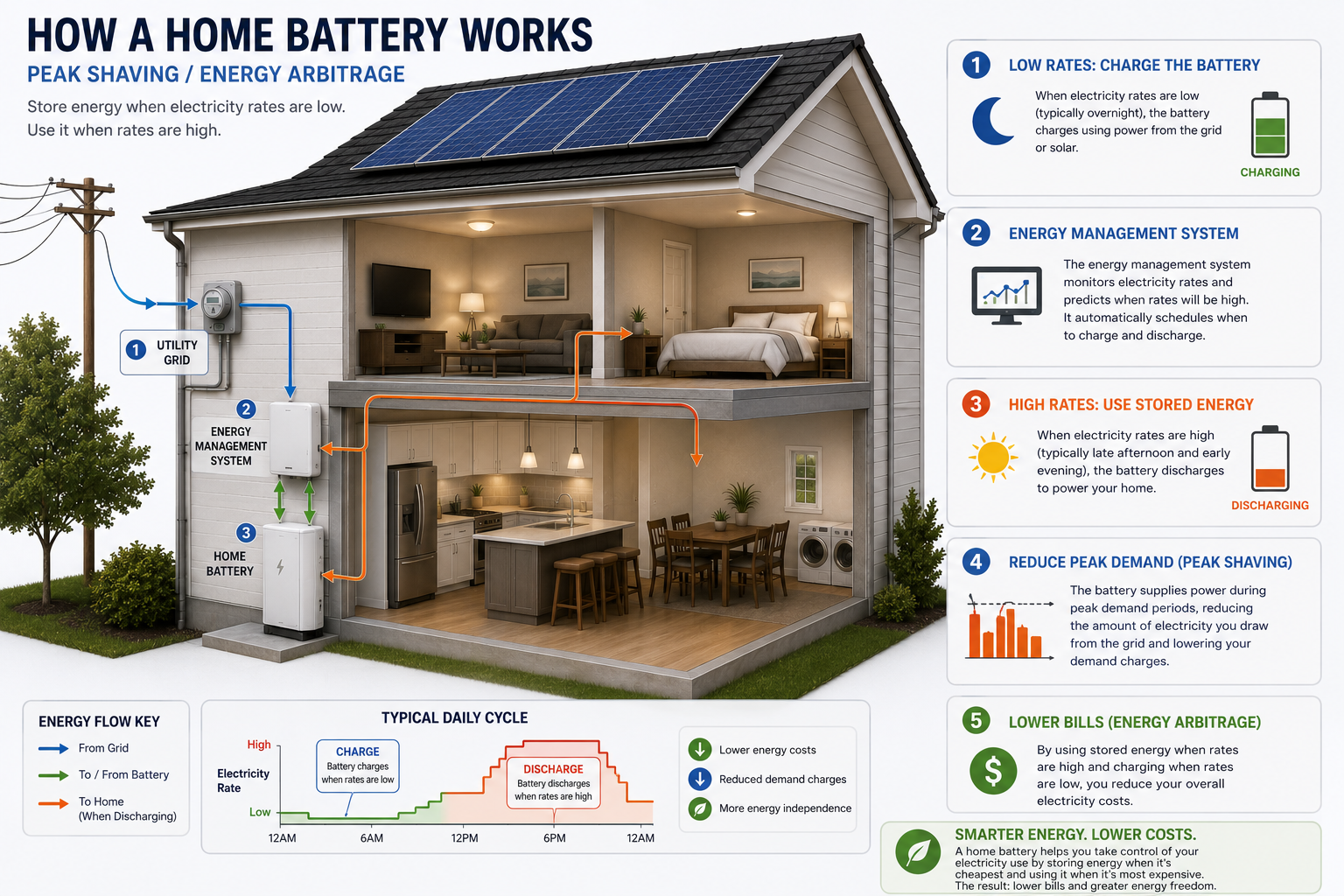
Utilities have a few hours every summer when their demand peaks past what the grid can handle cleanly. Instead of firing up an expensive peaker plant, they pay you to discharge your battery during those windows. In Rhode Island, Massachusetts, and Connecticut, that runs about $225 per kW per summer through ConnectedSolutions, roughly $1,125 a year on a 5 kW Powerwall, locked for 5 years at enrollment. In Vermont, GMP leases you the Powerwall outright for $55 a month and handles the dispatch automatically. Every state runs this differently. Your battery does the work either way.
Get my reportClick your state. See your storage program.
Each state runs storage differently. Tap any of the 11 blue states for that state’s deep-dive: program structure, install timeline, FAQs.
Tap your state for verified 2026 rebates and credits.
See what a home battery earns at your address.
Your Home Efficiency Score maps every eligible program to your exact address. Free, no obligation, sixty seconds.
Get my report