Solar in Vermont.
Full retail net metering, GMP per-kWh adders, and a 35% wood/oil/propane heating mix waiting to be displaced. the state-side stack makes Vermont's solar economy genuinely layered.
Your rate climbed 60%+ in 15 years.
Vermont's residential electric rate climbed from 14¢/kWh in 2010 to 22¢/kWh by 2025 on GMP territory. Vermont still credits exported solar at full retail rates, with GMP layering per-kWh adders.
What an 8 kW solar install in Vermont actually pays back.
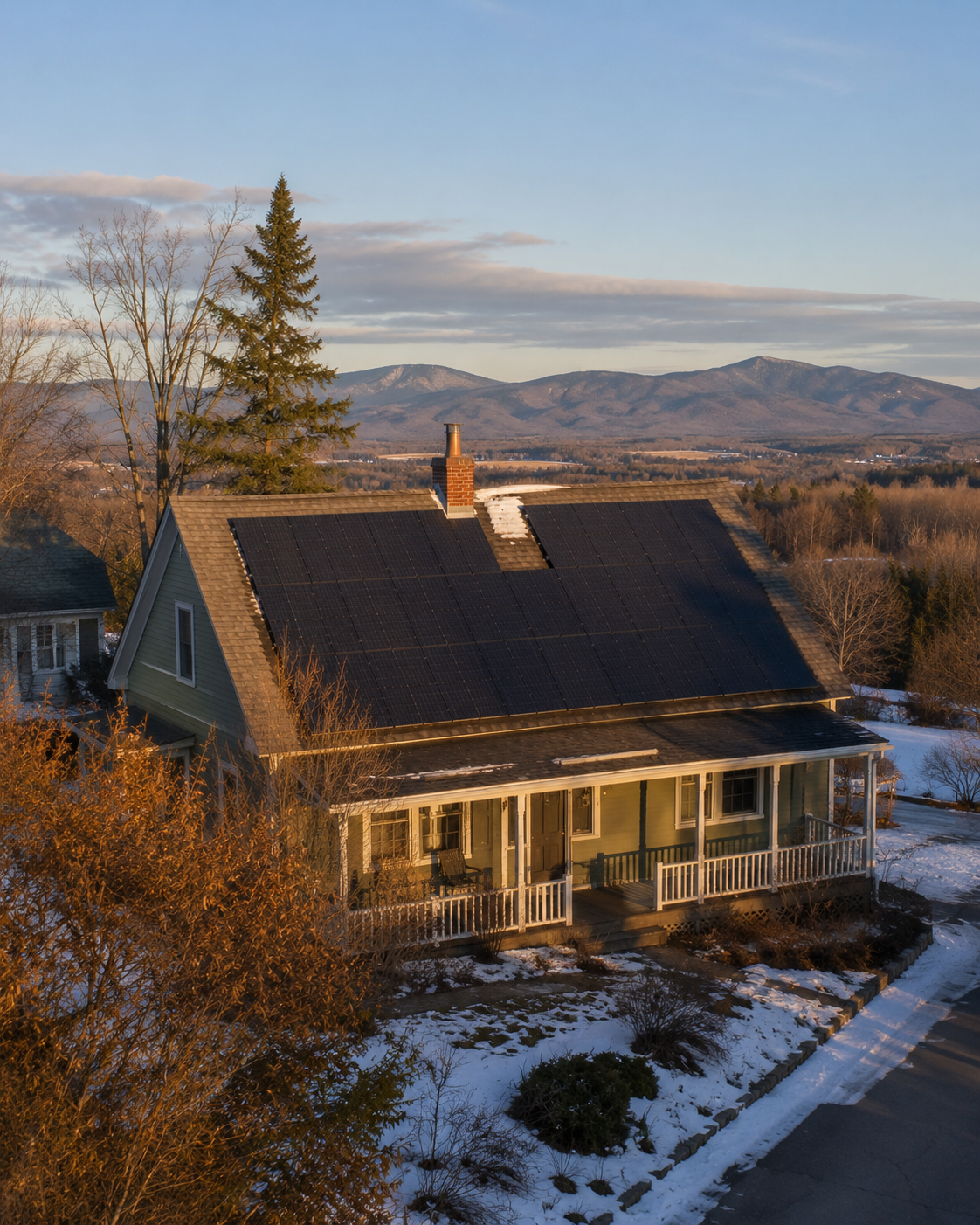
An 8 kW rooftop array on a Burlington home generates ~8,800 kWh/yr. Vermont's full retail net metering credits every exported kWh at the full residential rate, and GMP customers stack a per-kWh adder on top.
See the pieces of the stackVermont quietly stacks more solar incentives than most states.
Full retail net metering + GMP per-kWh adders + a 35% oil/propane heating mix about to electrify. The math is solid and structurally locked.
Still pays back.
- Lease / PPA financing, Section 48 ITC passed through to you~30% baked into payments
- Vermont retail net metering, every exported kWh credits at retailfull retail rate
- GMP base adder (systems < 15 kW)$0.01/kWh · 10 yrs
- GMP REC-transfer adder (additional)$0.03/kWh · 10 yrs
- Locked production cost over 30-year system life~9–11¢/kWh equivalent
From Score to panels on the roof.
The path from interest to a producing system, with realistic timelines for Vermont.
From first call to permission to operate.
A typical Vermont residential solar install runs 10–14 weeks from site survey to grid interconnection. Permitting and inspection sit on most of that runway.
The real questions Vermont homeowners ask.
The questions that actually come up in the first installer conversation, answered straight, for a typical Green Mountain homeowner in 2026.
GMP, VEC, or Burlington Electric, how does the deal change?
All three credit residential exports at retail, but the adders differ. GMP offers a $0.01/kWh base adder plus $0.03/kWh for REC transfer (10-year window, systems under 15 kW). VEC has a similar in-state benefit structure with somewhat smaller adders. Burlington Electric runs its own programs, including REC-related credits, typically a touch lower in nominal value but built into a lower overall rate base. Your Score uses the actual tariff for your address.
Vermont's grid is already 100% renewable on paper. Does solar still pencil?
Yes, and the math is more about your bill than the grid mix. Vermont utilities buy a lot of hydro from Hydro-Québec and credit it toward state renewable goals, but you're still paying retail rates for every kWh you draw. Net metering credits offset retail rates, period, independent of where your utility's electrons come from. Vermont's solar economics are driven by your bill, not the grid mix.
My property is shaded by mountains, is solar still worth it?
Depends entirely on your specific site. Mountain shading is more about the eastern and western horizon than the southern one, the sun is highest in the southern sky, so a south-facing roof in a valley often does fine. We model your specific shading using satellite imagery and topographic data when you generate your Score. If a roof system won't work, ground-mounted is often a better fit in Vermont, and the rate-hedge math works the same way.
Should I add a battery now or wait?
If you're a GMP customer, batteries are unusually attractive in Vermont because GMP's Bring Your Own Device program pays you for sharing battery capacity. If you're not on GMP, the battery question is more about resilience than economics. Adding storage at install is more cost-effective than retrofitting later either way. See our GMP Powerwall page for the full battery economics.
How does Vermont's CPG (Certificate of Public Good) process work?
For residential systems under 15 kW AC, Vermont uses an expedited registration process, your installer files Form 5028 with the Public Utility Commission. Most residential CPGs are issued within 4–6 weeks. Larger systems require a more involved review. Your installer handles all the paperwork; this is mostly a backend timing item, not a hassle for the homeowner.
What about siting setbacks and town aesthetic rules?
Vermont towns can impose reasonable aesthetic and setback rules under Act 56, but they can't ban residential solar outright. Roof-mounted systems are universally permitted. Ground-mounts in scenic areas (think parts of the Northeast Kingdom) sometimes require additional siting review. Historic districts in Burlington, Montpelier, and a few small towns may flag street-visible installations for design review. Your installer knows the local rules.
Other states and programs.
Looking for the same kind of program in another state, or a different program in yours? Tap any pill to jump.
See how solar fits your specific Vermont home.
Your Home Efficiency Score sizes the right system for your roof, models the production, runs the federal stack and state adders, and shows your real payback, based on your address and your actual utility bill.
Get my report