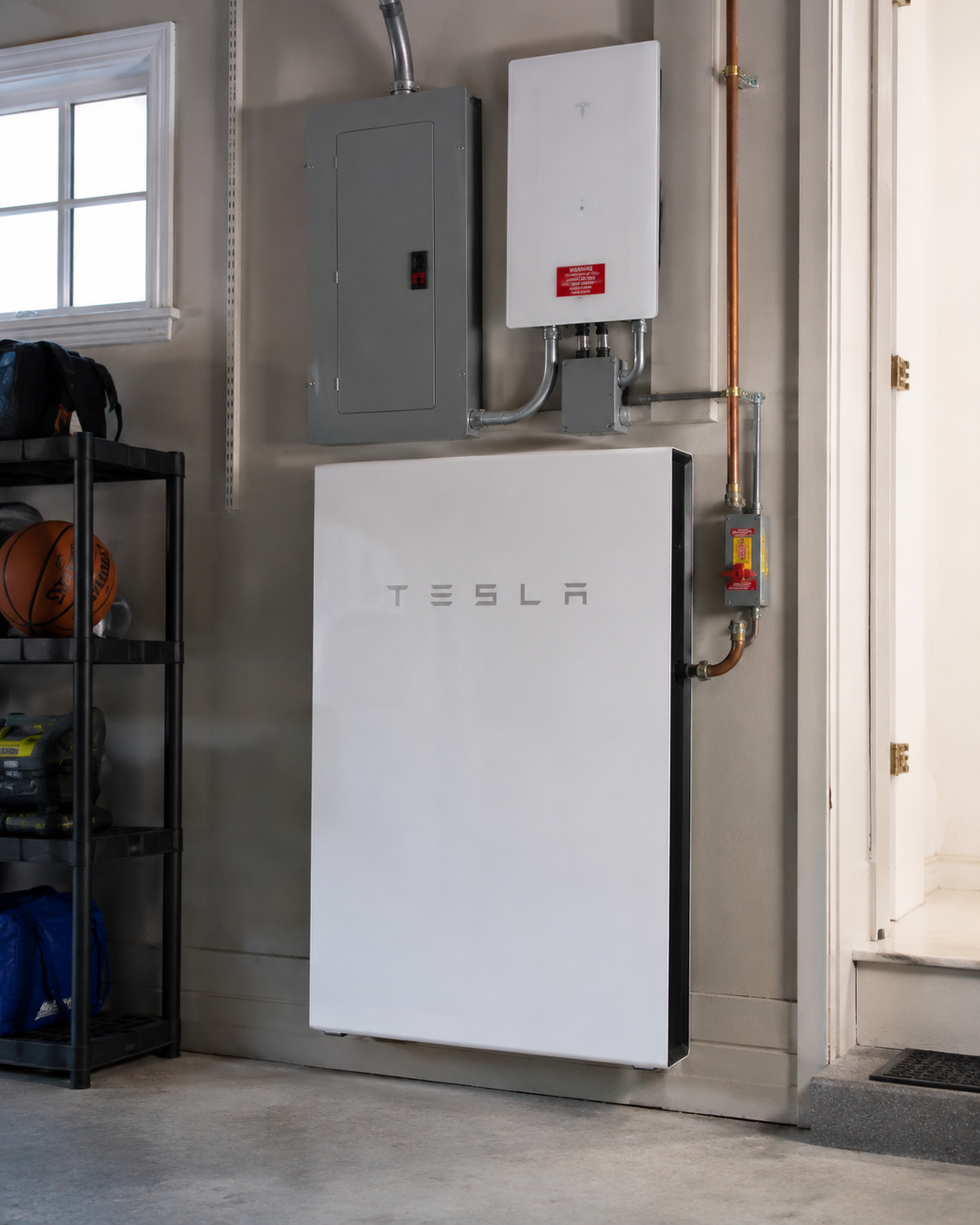
Third-highest residential electric rates in the country. A 4-9 PM peak window that punishes evening usage. Coastal Nor'easters that knock out power without warning. A battery in MA isn't a backup gadget, it's three jobs in one box.

Massachusetts residential electricity climbed from roughly $0.146/kWh in 2010 to $0.315/kWh today, averaging 5-6% per year. A battery sidesteps that climb on two fronts at once: peak-shaving the most expensive hours of every day, and locking in ConnectedSolutions payments at today's $275/kW rate for the next five summers.
A single Powerwall 3 (or Enphase IQ Battery, FranklinWH, or equivalent) earns three ways at once. ConnectedSolutions pays you to let the utility dispatch the battery on summer peak afternoons, at a rate locked for 5 summers. Peak-shaving the 4-9 PM window replaces the most expensive grid kWh of your day. And backup keeps the lights on when the Nor'easter hits.
See the pieces of the stackIn a low-rate state with a stable grid, residential storage is mostly about backup peace of mind. In Massachusetts, the same battery does three things at once, and each one stands on its own economically.
Eversource and National Grid time-of-use rates spike from 4 to 9 PM. Solar charges the battery at midday for free, the battery discharges through the peak window, and your most expensive grid hour becomes something you stored at the cheapest hour.
A Massachusetts home battery earns three ways at once. Each line stands on its own. Stacked, they're the math that makes the project pencil.
A typical Massachusetts battery install runs 7–12 weeks from first call to Permission to Operate, with ConnectedSolutions activation following shortly after.
The questions that actually come up in the first installer conversation, answered straight, for a typical MA homeowner in 2026.
Both, but the priority shifts the design. If you primarily want whole-home backup through a Nor'easter, you size to your essential loads (fridge, well pump, furnace blower, internet) for at least 24 hours. If your priority is shaving the 4-9 PM peak, you size to your typical evening kWh draw plus margin. A single 13.5 kWh Powerwall handles both for most MA homes; bigger homes or homes with cold-climate heat pumps often want two.
Most MA utilities, Eversource, National Grid, Unitil, peak between 4 PM and 9 PM on weekdays year-round, with the steepest summer events on hot afternoons when AC load surges. ConnectedSolutions dispatch events generally fall inside that window. Your battery's daily discharge schedule is auto-tuned to this; you don't manage it manually.
The utility signals your battery to discharge to the grid (or to offset your home load) for up to 3 hours during a peak event. You get notified, but no action is required. You're capped at 60 events per summer season. If a storm hits during a scheduled dispatch, the battery prioritizes your home's backup, you don't lose your reserve to the program.
Lithium-iron-phosphate batteries (the chemistry used by Powerwall 3, Enphase IQ, FranklinWH) are rated for outdoor and indoor install across all MA temperature ranges. The bigger risk during a multi-day Nor'easter is sizing, a single battery covers essentials for 24-36 hours. Pairing storage with solar lets the battery recharge from the array on subsequent storm days, extending effective backup indefinitely if the panels can see daylight.
Lease/PPA financing carries the commercial Section 48 ITC through to the homeowner as lower monthly payments. Paired with solar, the battery captures excess midday production at zero marginal cost, that's the highest-economic-value setup. Standalone, the battery still earns ConnectedSolutions revenue and shaves your peak window, but its charging energy comes from the grid at off-peak rates rather than free. For an MA home with no solar, a standalone battery is a slower payback; with solar already in place, it's a strong addition.
Yes, and in a good way. Massachusetts SMART tariff economics favor self-consumption over export. Storage lets you absorb your midday solar surplus and redeploy it during the 4-9 PM peak rather than exporting it at a discounted rate. For SMART-tariff homes, this can recover meaningful value the export rate leaves on the table.
Looking for the same kind of program in another state, or a different program in yours? Tap any pill to jump.
Your Home Efficiency Score sizes the right battery for your panel and bill, models the ConnectedSolutions revenue, runs the rate-hedge math, and shows your real payback, based on your address and your actual utility.
Get my report