DTE customers average more than triple the national outage time. Ice storms, derechos, and lake-effect snow knock the lights out for days. Michigan also just mandated 2,500 MW of utility-scale storage by 2030, and DTE/Consumers are rolling out new residential demand-response programs to match. A home battery is infrastructure here, not luxury.

Michigan residential electricity climbed from roughly 12.7¢/kWh in 2010 to ~21¢/kWh today, averaging about 3.4% per year, the fastest climb in the Great Lakes. The MPSC approved a $242M DTE rate hike in early 2026 and another adjustment is in the queue. The case for storage here is resilience-first, with arbitrage and grid-services value layered on top.
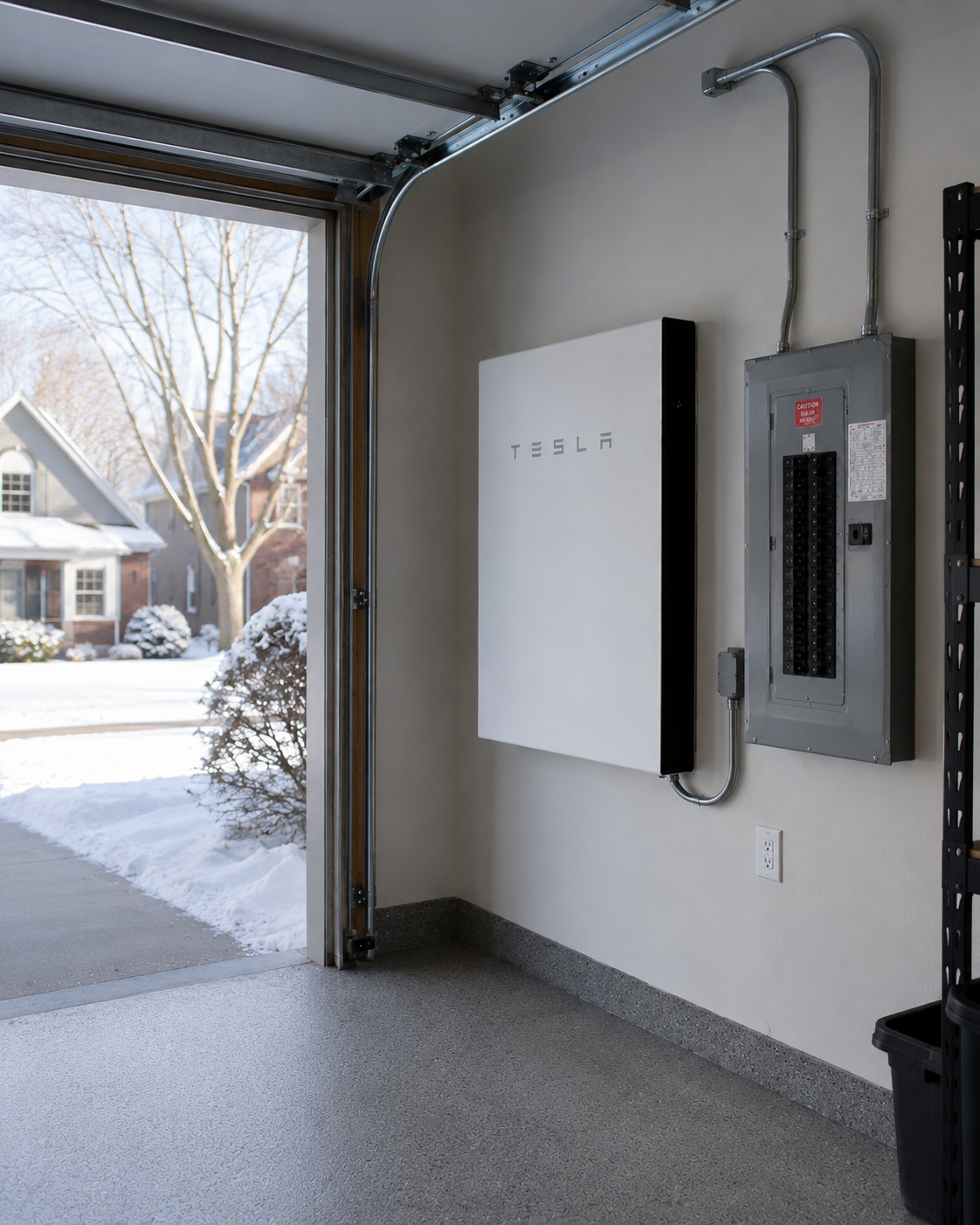
Take a DTE customer in Oakland County who adds a Powerwall 3 alongside their existing solar array. Two value streams: ongoing DTE Time-of-Day arbitrage on the 3-7 PM weekday peak, and resilience against the 450+ outage minutes that the average DTE home logs every year. Solar self-consumption is a quiet third.
See the pieces of the stackDTE and Consumers Energy are catching up on grid hardening (the 2023 storm forced a regulatory reckoning) but Michigan still sits in the bottom tier of U.S. reliability. The MPSC approved a 2,500 MW utility-scale storage mandate in March 2026, and the residential demand-response pilots that will follow are next on the rulemaking docket.
Michigan doesn't run a state residential battery rebate (yet, the MPSC mandate sets the stage). The value flows through three working channels: DTE/Consumers Time-of-Day arbitrage, ongoing resilience against high-frequency outages, and solar self-consumption against retail rates. Each line stands on its own. Stacked, they make the project pencil even without a state grant.
A typical Michigan battery install runs 7–11 weeks from first call to Permission to Operate. DTE and Consumers Energy interconnection paperwork is the main timing variable.
Actual questions that come up in the first installer conversation, answered for a typical MI homeowner in 2026.
The honest figure: DTE residential customers have averaged 450+ minutes of outage time per year, with major events pushing some neighborhoods past a week without power. DTE reported a 60% reduction in outage minutes for 2025 vs. 2024, which is real progress, but Michigan is still firmly in the bottom tier nationally for grid reliability. A battery insulates your home from that variance regardless of which direction the trend goes.
Yes, with realistic load planning. A 13.5 kWh battery can cover the essential circuits, furnace blower (gas heat still needs electricity to run), fridge, well pump, sump pump, lights, and Wi-Fi, for 24-36 hours of typical winter draw. A second battery doubles that. Solar charging during the day extends it indefinitely as long as there's sun, even a snowy overcast day produces meaningful kWh in February.
That's where solar+storage starts beating a standby generator. A generator runs out of fuel; deliveries stop when roads are closed. A solar-charged battery refills daily as long as there's any sun overhead. For rural west-Michigan and Up North homes, this is the resilience pattern that actually works through a multi-day event.
Absolutely, and gas-heated homes are some of the easier sizing problems. Your furnace needs only its blower motor and ignition powered, which together draw ~500-800 watts. A 13.5 kWh battery dedicated to furnace + fridge + lights + sump pump easily lasts 24+ hours. You're not trying to run a heat pump on it.
It pays meaningful dollars but not enough to justify storage on its own. DTE's ToD spread is narrower than ConEd's, annual arbitrage value typically lands $300-400 for a 13.5 kWh system. Consumers Energy Smart Hours runs similar. Layered on top of resilience and solar self-consumption, it shifts the project from "expensive insurance" to a system with a real long-term return.
The MPSC approved a 2,500 MW utility-scale storage mandate in March 2026, which is the precursor to the residential demand-response programs DTE and Consumers will need to file. Most state programs follow this sequence (utility-scale procurement first, distributed/residential incentives second). Realistic timeline: 2027-2028 for a formal MI residential battery rebate. Until then, the value flows through arbitrage and resilience, which already make the math work in DTE territory.
Looking for the same kind of program in another state, or a different program in yours? Tap any pill to jump.
Your Home Efficiency Score sizes the right battery for your panel and bill, plans the loads worth backing up for the next ice storm, runs the DTE/Consumers ToD arbitrage math, and shows your real backup hours based on your address and utility.
Get my report